

Choosing between a Roth IRA vs Traditional IRA is an important decision for Americans who want to save for retirement while managing their taxes. The biggest difference is when you pay taxes. A Roth IRA uses after-tax contributions and allows tax-free qualified withdrawals, while a Traditional IRA may reduce your taxable income today but generally requires you to pay taxes on withdrawals during retirement.
So, which retirement account is better for your income and long-term financial goals?
Roth IRA vs Traditional IRA: Key Differences
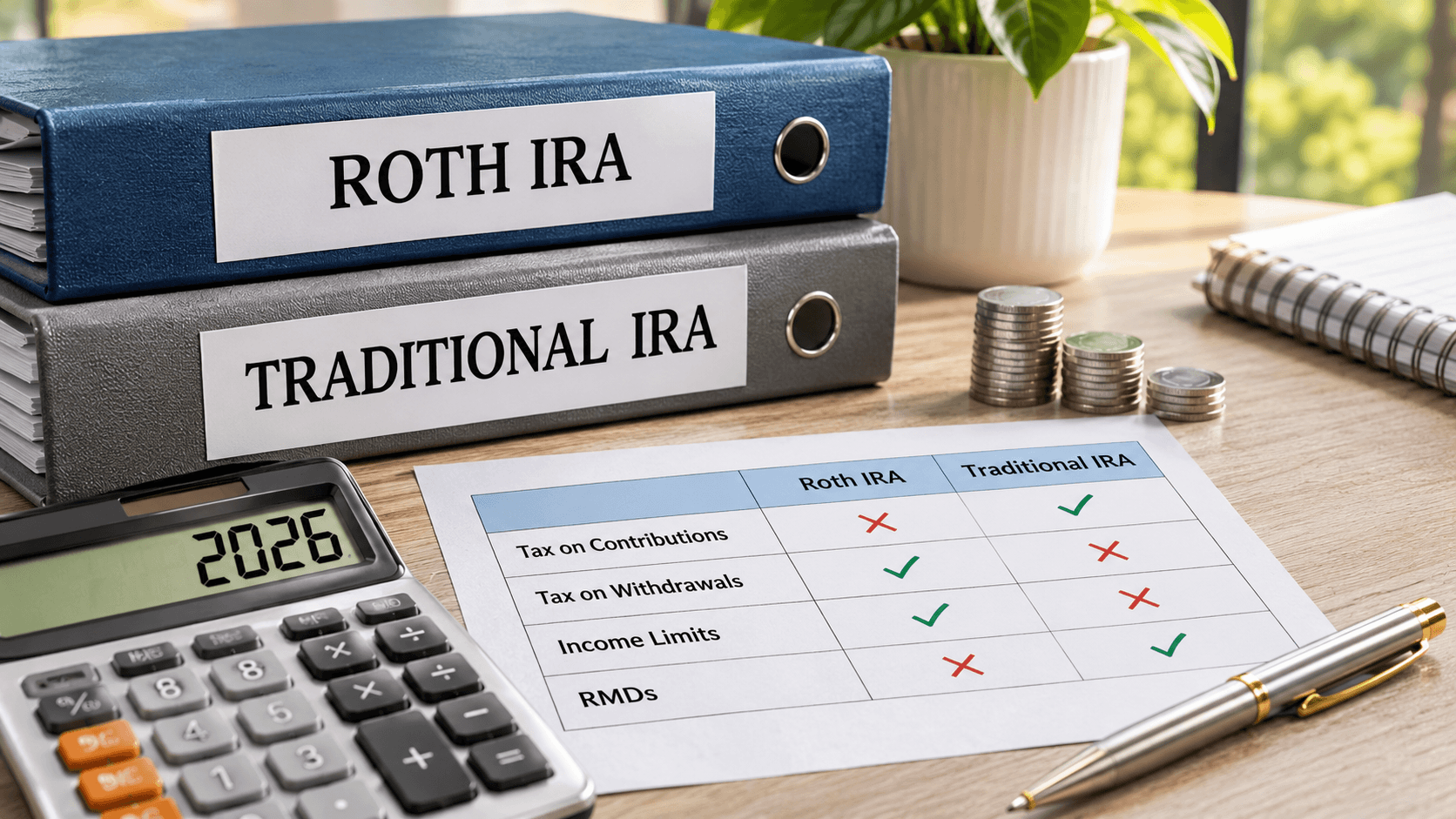
Both are individual retirement accounts designed to help Americans save for retirement. However, they have different rules regarding taxes, income eligibility, and withdrawals.
| Feature | Roth IRA | Traditional IRA |
|---|---|---|
| Tax treatment of contributions | After-tax contributions | Contributions may be tax-deductible |
| Taxes in retirement | Qualified withdrawals are tax-free | Withdrawals are generally subject to income tax |
| 2026 contribution limits | $7,500, or $8,600 if age 50 or older | Same limits |
| Income limits | Income restrictions apply to direct contributions | No income limit for contributions, but tax deductions may be restricted |
| Withdrawals before age 59½ | Regular contributions can generally be withdrawn tax-free and penalty-free | Taxable withdrawals may face an additional 10% penalty unless an exception applies |
| Required Minimum Distributions (RMDs) | None during the original account owner's lifetime | Generally begin at age 73 |
Roth IRA vs Traditional IRA: Which Offers Better Tax Benefits?
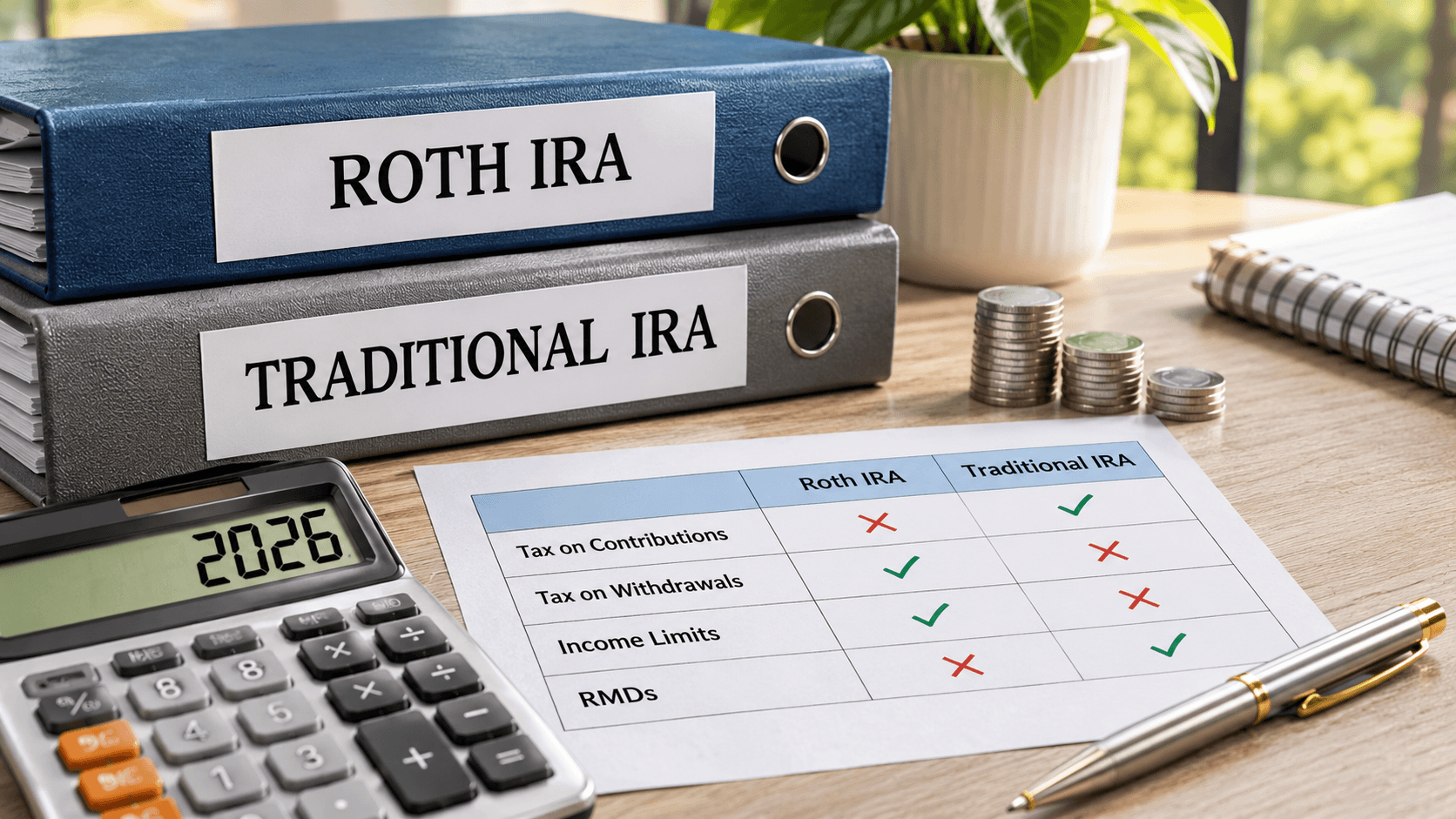
Roth IRA: Pay Taxes Now, Save on Taxes in Retirement
Roth IRA contributions are made with after-tax income, meaning they do not reduce your taxable income in the year you contribute.
However, once you meet the required age and account holding-period conditions, you can withdraw both your contributions and investment earnings without paying federal income taxes.
A Roth IRA may be worth considering if you expect your tax rate to be higher in retirement than it is today.
For example, someone starting their career with a relatively low income may prefer a Roth IRA because their current tax rate could be lower than their future rate.
Traditional IRA: Potentially Lower Your Taxes Today
A Traditional IRA allows eligible individuals to deduct contributions from their taxable income. This can be particularly beneficial for higher-income earners who want to reduce their current tax liability.
However, withdrawals from a Traditional IRA during retirement are generally subject to ordinary income tax, except for any portion representing previously taxed, nondeductible contributions.
A Traditional IRA may be more suitable if you are currently in a higher tax bracket and expect to be in a lower one during retirement.
Roth IRA vs Traditional IRA Contribution Limits for 2026
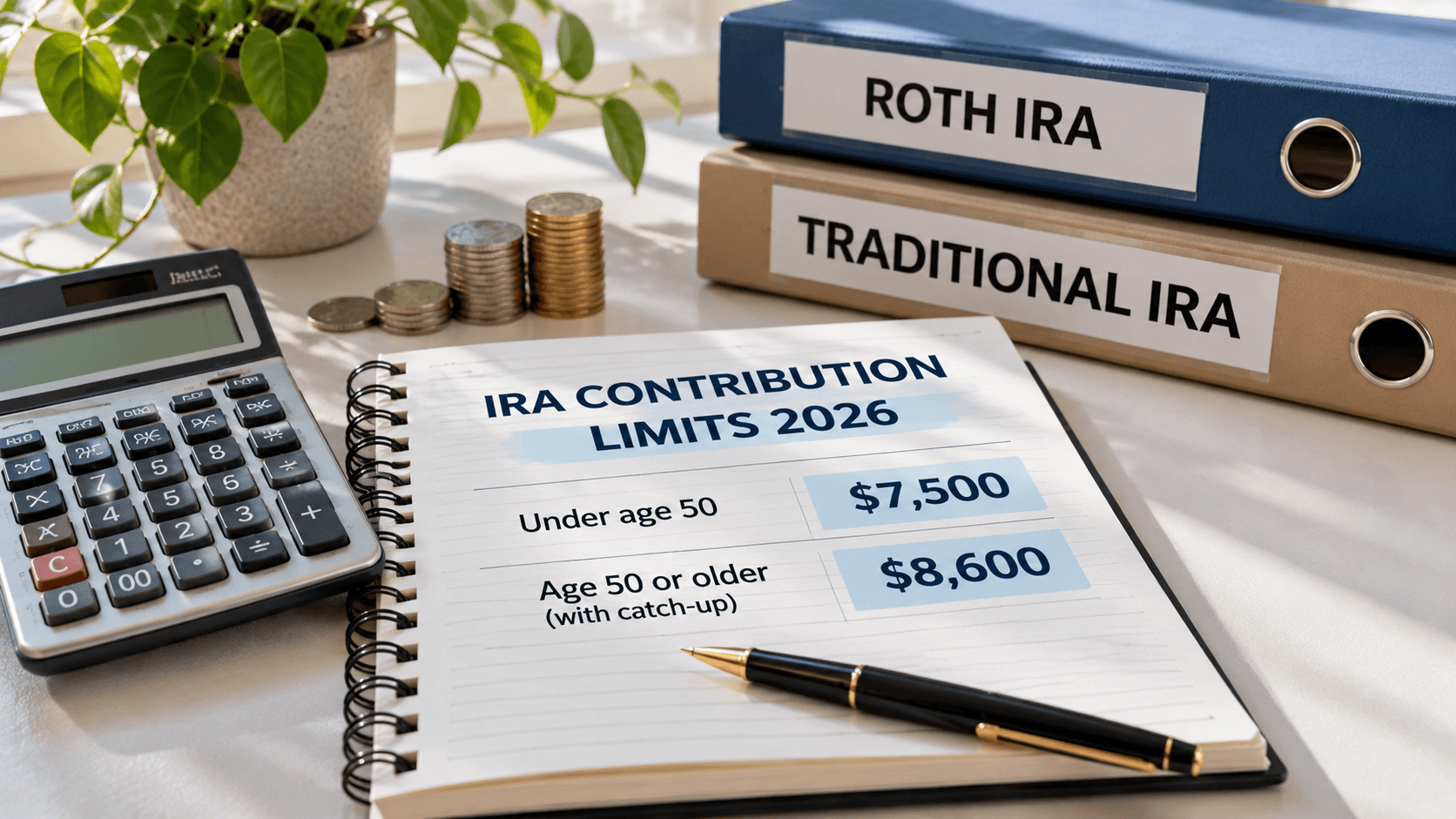
According to the IRS, the IRA contribution limits for 2026 are:
-
Under age 50: Up to $7,500.
-
Age 50 or older: Up to $8,600, including an additional $1,100 catch-up contribution.
These limits apply to your combined contributions across all Roth IRAs and Traditional IRAs, not separately to each account type.
For example, if you are under 50 and contribute $4,000 to a Roth IRA in 2026, you can generally contribute only another $3,500 to a Traditional IRA for the same year.
Your total contributions also cannot exceed your eligible earned income, subject to special rules such as spousal IRA contributions.
For more details about contribution amounts and income restrictions, read Roth IRA Contribution Limits 2026: Income & Age Rules on Lofita.vn.
Income Limits: Who Can Open Each IRA?
Roth IRA Income Limits in 2026
Your ability to contribute directly to a Roth IRA depends on your modified adjusted gross income (MAGI) and tax filing status.
| Tax Filing Status | 2026 Income Phase-Out Range |
|---|---|
| Single filers | $153,000–$168,000 |
| Married filing jointly | $242,000–$252,000 |
Once your income reaches the upper limit for your filing status, you can no longer make direct Roth IRA contributions.
Traditional IRA Income Limits in 2026
A Traditional IRA does not impose an income limit on contributions, provided you have eligible compensation.
However, your ability to deduct those contributions may be reduced or eliminated depending on your income and whether you or your spouse participates in a workplace retirement plan.
For example, single filers covered by a workplace retirement plan in 2026 face a deduction phase-out when their MAGI falls between $81,000 and $91,000.
Therefore, it is important to distinguish between eligibility to contribute and eligibility for a tax deduction.
Withdrawal Rules: Which IRA Is More Flexible?

A Roth IRA offers greater flexibility when withdrawing regular contributions. You can generally withdraw these contributions at any time without paying income taxes or the 10% early withdrawal penalty.
However, withdrawing investment earnings is subject to different rules. For earnings to qualify for tax-free treatment, you generally must satisfy the five-year rule and be at least age 59½, or meet another qualifying exception.
With a Traditional IRA, taxable withdrawals made before age 59½ are generally subject to income tax and may trigger an additional 10% early withdrawal tax unless an exception applies.
Traditional IRAs also generally require account owners to begin taking Required Minimum Distributions (RMDs) at age 73. Roth IRAs do not have this requirement during the original owner's lifetime.
Which Is Better: Roth IRA or Traditional IRA?
The better choice depends on your individual financial circumstances.
A Roth IRA may be better if:
-
You are currently in a relatively low tax bracket.
-
You expect your income or tax rate to increase in the future.
-
You want access to tax-free qualified withdrawals during retirement.
-
You prefer to avoid RMDs during your lifetime.

A Traditional IRA may be better if:
-
You qualify for deductible contributions and want to reduce your current taxes.
-
Your current tax rate is higher than the rate you expect during retirement.
-
You want to defer taxes on deductible contributions and investment earnings.
Some investors may benefit from holding both account types to diversify their future tax treatment, provided their combined contributions remain within IRS limits.
Frequently Asked Questions
Can You Have Both a Roth IRA and a Traditional IRA?
Yes. You can own and contribute to both types of IRAs in the same year. However, your combined contributions must stay within the annual IRA contribution limit, and you must meet the applicable eligibility requirements.
Is Roth IRA Better for Young Investors?
A Roth IRA can be attractive to younger investors who are currently in lower tax brackets and expect their income to increase over time.
However, the best choice also depends on income eligibility and whether Traditional IRA contributions would qualify for a tax deduction.
Can You Convert a Traditional IRA to a Roth IRA?
Yes. You can convert a Traditional IRA into a Roth IRA. However, any converted amount that has not previously been taxed is generally included in your taxable income for the year of conversion.
A Roth IRA may be more suitable for individuals who expect higher tax rates in the future, while a Traditional IRA may offer greater benefits to those who qualify for deductions and currently face higher tax rates.
Visit Lofita.vn to learn more about IRA contribution limits, retirement planning, and personal finance in the United States.


Comments 0